

Serrated knives are easy to overlook until you really need one. The moment you try slicing through a crusty loaf or a ripe tomato with a straight blade, the difference becomes obvious. A professional serrated knife is designed for exactly these situations, where a clean cut depends on grip as much as sharpness.
In both home kitchens and professional settings, this knife earns its place by handling foods that tend to resist or collapse under a smooth edge.
What is a Professional Serrated Knife?
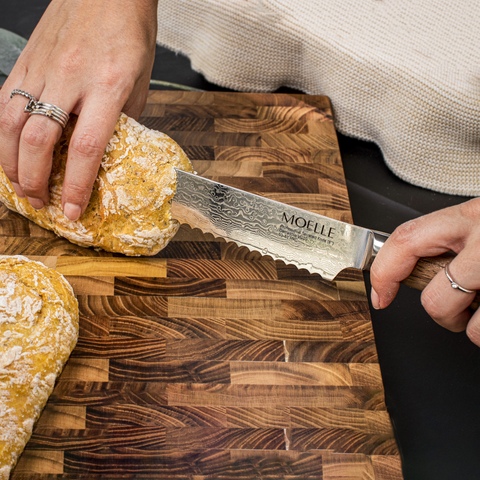
A professional serrated knife, often called a bread knife or serrated utility knife, features a blade with small saw-like teeth along the edge. Instead of relying on a single continuous edge, the teeth grip the surface of the food and guide the blade forward.
This makes it especially effective for ingredients that have:
-
Hard or crusty exteriors
-
Slippery skins
-
Soft or delicate interiors
Think of freshly baked bread, citrus fruits, tomatoes, or soft cakes. In these cases, the serrated edge helps maintain structure while cutting cleanly through the surface.
What are the Benefits of a Professional Serrated Knife?
Versatility
Although many people associate serrated knives with bread, their usefulness goes well beyond the breadboard. They handle delicate produce and soft baked goods with surprising control.
Clean Cuts
The teeth gently saw through the outer surface rather than crushing it. This helps preserve the texture and appearance of the food, which becomes especially noticeable with soft items.
Efficiency
Because the blade grips as it cuts, less downward pressure is needed. The motion feels more guided and controlled, particularly when working with tough crusts or smooth skins.
Edge Retention
Serrated knives often stay effective for longer periods because the cutting force is distributed across multiple points along the edge.
Ease of Use
With the right motion, the knife does much of the work for you. Many cooks find serrated blades more forgiving, especially when working quickly or with delicate ingredients.
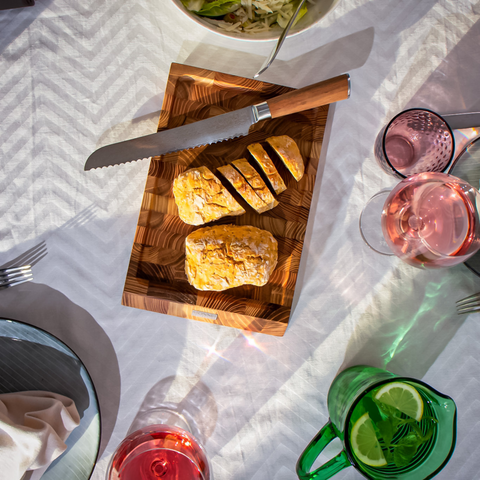
When a Serrated Knife Is Most Useful
In everyday cooking, a serrated knife tends to shine in a few specific situations:
-
Slicing crusty artisan bread
-
Cutting tomatoes without crushing them
-
Segmenting citrus fruits
-
Portioning cakes and pastries
-
Working with melons or foods with firm skins
Having the right knife for these tasks often makes prep feel noticeably smoother.
FAQs about Professional Serrated Knives
-
Can I use a serrated knife for things other than bread?
Yes. While bread is the classic use, serrated knives work very well for tomatoes, citrus, cakes, and other foods with firm exteriors and soft interiors. -
Do I need to sharpen a serrated knife?
Less often than a straight-edge knife. When performance drops, a specialized sharpener or professional service is usually the best approach. -
How should I clean and maintain a serrated knife?
Wash it by hand with mild soap and warm water, then dry it thoroughly. Avoid the dishwasher and harsh abrasives to protect the edge. -
Are serrated knives only for professionals?
Not at all. They are practical, easy to use, and valuable in both home and professional kitchens.
A Quiet Essential in the Kitchen
A professional serrated knife is not always the most used tool in the drawer, but when the task calls for it, very little works better. From warm bread to delicate produce, it handles textures that challenge a straight blade.
Keeping one within reach brings a certain ease to everyday prep. The cuts are cleaner, the motion feels more controlled, and the results tend to look just a bit more considered.


